Collet Register earns referral commissions from qualifying purchases through our links at no additional cost to you. Read our affiliate earnings & merchant referral policy
Mastering the delicate process of watch pointer removal requires the right tool configuration to protect fragile dials and pinions.
Removing watch hands—whether servicing an automatic movement, replacing a damaged dial, or swapping out hands for a custom mod—is one of the most high-risk tasks on the watchmaker's bench. A slip can scratch a pristine dial, bend a delicate seconds pinion, or break a hand tube entirely. To achieve consistent results, horologists rely on specialized extraction instruments designed to lift hands vertically and evenly.
When looking to equip your workbench, you will generally encounter two primary designs: bench-mounted plunger systems and handheld puller pliers. Understanding how each style functions, along with their associated protective accessories, will help you select the right apparatus for your projects.
Plunger-Style Hand Removers (Bench Presses)
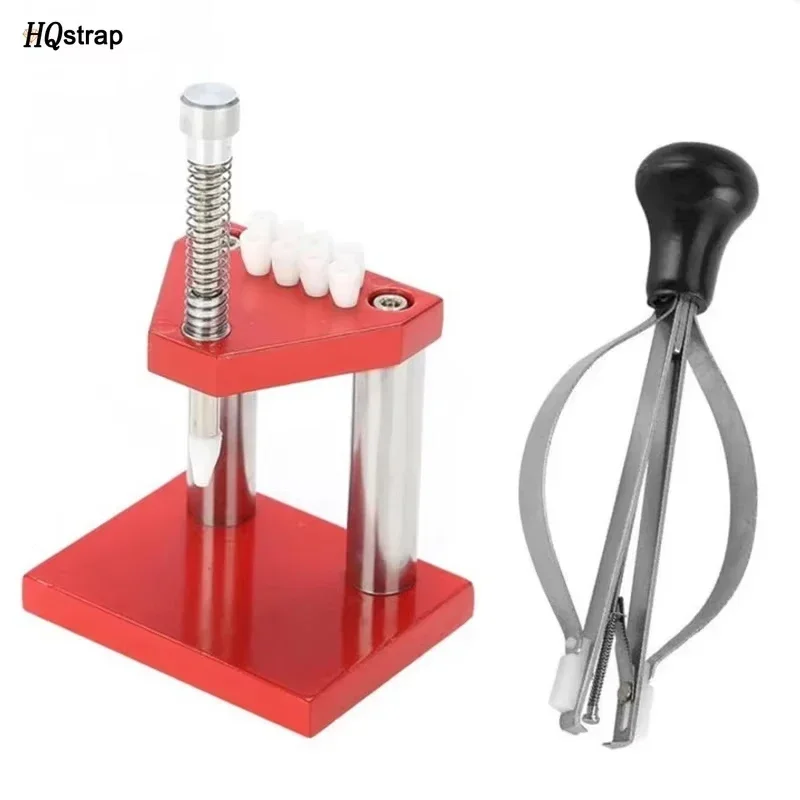
A bench-mounted plunger tool utilizes a vertical spring-loaded mechanism housed on a rigid stand. The movement is placed on a flat platform beneath a set of plunger pins (typically nylon or plastic-tipped). By depressing the plunger handle, the downward-facing tip engages the center of the watch hand cluster, lifting the hands straight off their friction-fit pinions in a single, controlled vertical motion.
This design excels in precision and repeatability. Because the descent is vertically guided, it virtually eliminates lateral torque that can bend delicate hand tubes.
Handheld Plier-Type Pullers
For quick disassembly or fieldwork, handheld spring-loaded pullers are a staple. These tools resemble small pliers with side springs and parallel-closing tips that slide underneath the hand pipe. Squeezing the handle closes the two protective plastic jaws evenly around the cannon pinion or hour wheel socket, lifting the hand cleanly away from the dial face.
While they require a steady hand to avoid tilting, they offer rapid operation and a direct feel for the resistance of the hand fitment.

Protecting the Dial: Shims and Cushions
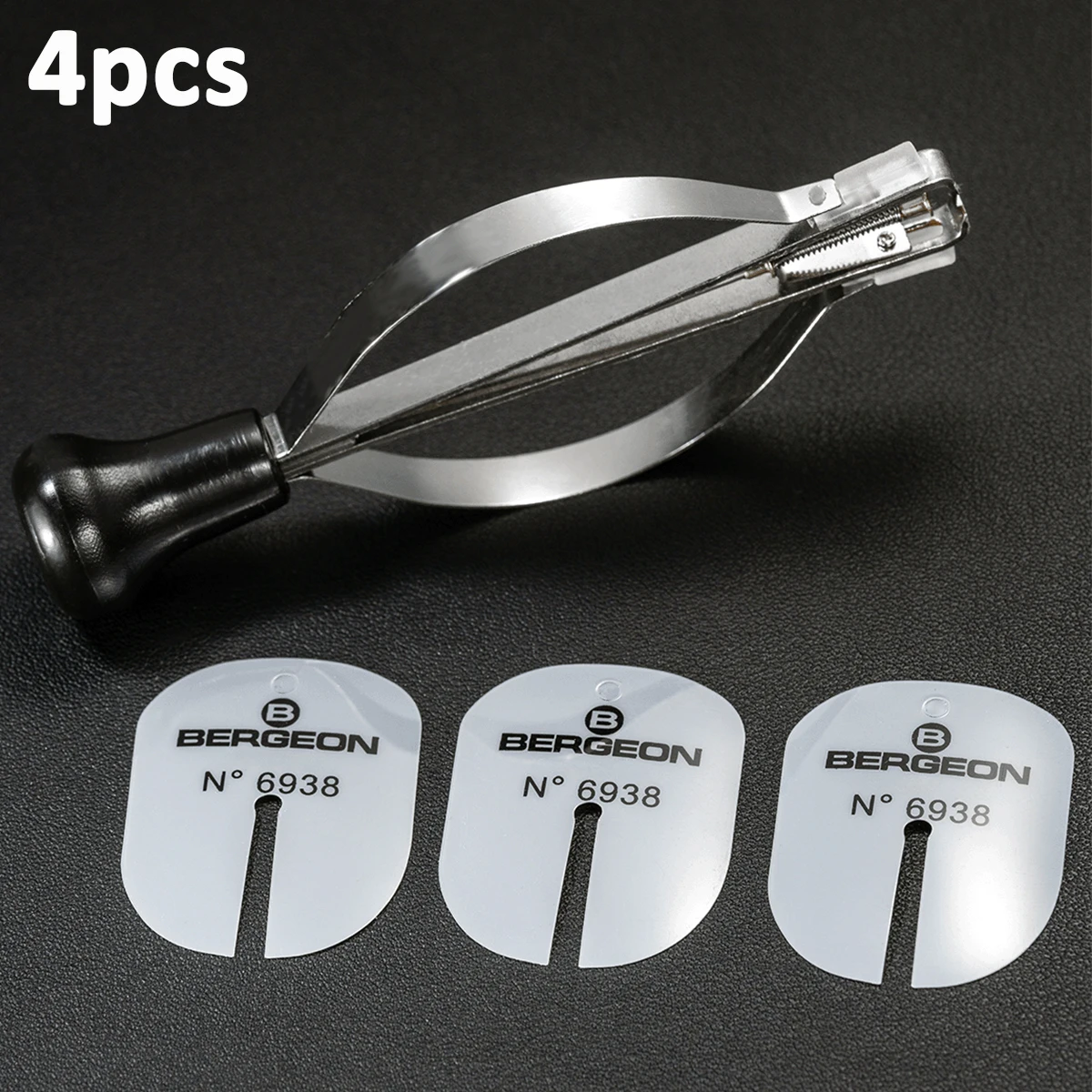
Regardless of whether you use a plunger press or handheld pliers, protecting the dial surface is paramount. Even a minor touch against a painted or sunburst dial can leave permanent scarring. Professional kits often incorporate dial protectors—thin, slotted plastic cards or metal shims (such as the standard N° 6938 style) that slip directly under the hands around the canon pinion.
These shields act as a physical barrier between the tool tips and the fragile dial face, absorbing any accidental contact.
Pro-Tips for Safe Hand Removal
- Always use a dial protector or shim to safeguard against slips.
- Ensure the tool tips are clean and free of grit or hardened old oils.
- For deeper insights on tooling choices, explore our guide on Watch Hand Removal Tools Compared: Plunger Pullers and Manual Lifting Levers.
- Check that the hand slots are wide enough to clear the specific hand stacking of your movement ( chronograph vs. standard three-hand layouts).
Making Your Decision
Choosing the right watch hand remover depends entirely on your workspace and frequency of use. If you maintain a dedicated bench and prioritize absolute vertical stability to safeguard vintage or high-end dials, a bench plunger system is an invaluable investment. Conversely, if you need a versatile, portable tool that fits easily into a compact repair pouch, a spring-loaded handheld puller paired with protective shims offers an efficient, budget-friendly solution.